The Industry Forum for Drilling Practices and Technology
Thank You to Our Website Sponsors




AADE Houston FMG Meeting
When: Sep 22, 2022 @ 1:30 PM to 4:00 PM
Want to SPONSOR the FMG Meetings? The cost is $500 for the calendar year. Click Here to Sponsor!
REGISTER HERE
DATE: Thursday, September 22, 2022 - 1:30 PM - 4:00 PM
LOCATION: Embassy Suites - Houston Energy Corridor, 11730 Katy Freeway, Houston, TX 77079. Kirkwood Exit next door to TechnipFMC.
COST: Member: Free to attend / Non-member: $15
Non-members have the option to join as a member or renew your membership before registering, then the meeting cost will be free as well as all subsequent DTC meetings for 2022. If you register for virtual attendance, the meeting link will be sent within 24 hours of the meeting date.
Program Topic: “Geothermal Fluid Technology Gaps and Challenges”
SPEAKERS
|
1. Fred Dupriest, Professor – Texas A&M University
Presenting – “Geothermal Overview: Drilling Performance and Fluids”
|
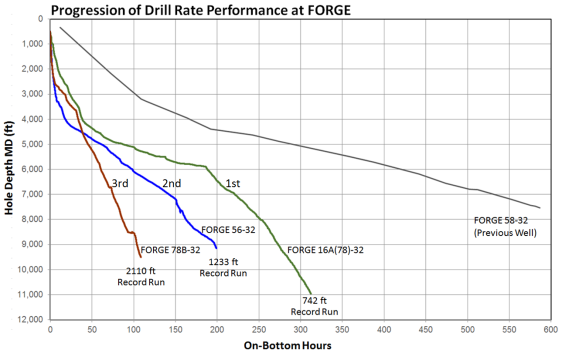
The progression in performance at the DOE’s FORGE geothermal research drilling site last year demonstrated that very large industry-wide gains in performance are possible. Rotating hours were reduced by 80% and fluids played a major role. We’ll talk about the physics and implementation of this change, but the reason for doing so is primarily to make a philosophical point. Performance gains rarely come from new technology, and in fact none of the gain at FORGE was due to new technology. The challenge in the geothermal industry is not in technology transfer, but in the transfer of physics-based knowledge needed to support physics-based practices. We’ll talk about the dominant performance limiters related to fluids, as well as the knowledge the fluids industry needs to create and sustain in the geothermal sector. Don’t sell me a better mouse trap, unless you also plan to tell me how to set it.
Fred Dupriest retired in 2012 as the Chief Drilling Engineer after 35 years with ExxonMobil. After retirement, he became a Professor of Practices at Texas A&M where he’s taught advanced drilling practices. He’s also worked with numerous industry drill teams to improve performance by moving their organizations toward physics-based, limiter-redesign workflows. Fred is a member of the AADE Drilling Fluids Hall of Fame, a Distinguished Member of the Society of Petroleum Engineers, and a recipient of the SPE International Drilling Engineering Award.
|

|
2. David Horton, Technical Manager of Well Construction Fluids, HDD, Mining and Geothermal – M-I SWACO, a Schlumberger Company
Presenting – “A Detailed Look at the Challenges of Geothermal Drilling Fluids”
For over a century, techniques have been developed to access and harness the Earth’s energy through Geothermal Drilling and development. Even with today’s modern drilling tools and technology, the challenges remain as they always have: ultra-high temperature; kicks from saturated steam pressure, and volcanic/intrusive metamorphic formations. For Drilling Fluids, these challenges create technology gaps that we have yet to fill. For fluid technology to succeed, it must be robust enough to withstand the harshness of the downhole environment, but also fragile enough to not cause lasting damage to the reservoir. It must be effective, but also economical with the volumes required for 12 ¼”, 9 7/8”, and 8 ½” hole sections. This presentation will strive to articulate both the challenges and the technology gaps in sufficient detail to help fill those technology gaps and improve Geothermal Drilling Fluids technology for years to come.
David Horton has been with M-I SWACO for 9 years and in the Drilling Fluid industry for 16 years. For 6 of those years, David worked internationally, with the majority of that time spent as the Fluids Technical Manager in Jakarta, Indonesia. David is currently with M-I SWACO’s HDD, Mining, and Geothermal Drilling Fluids Division based here in Houston, and is here to share some of the most pressing challenges to Drilling Fluids in Geothermal drilling and what technology gaps still exist today.
3. Dr. Kyriacos Agapiou, Technology Manager – Halliburton
Presenting – “Geothermal Cementing Challenges”
As demand for energy sources increase worldwide, geothermal operations offer a reliably sustainable, environmentally friendly, and cost-effective means of generating power. To harness geothermal energy, subterranean wells are drilled into formations exhibiting geothermal activity and constructed to manage injection and production of fluids. The produced, superheated fluids return to the surface and yield electricity via steam turbines or power plant systems. While the construction of geothermal wells is comparable to oil and gas counterparts, the downhole geothermal operational environment is often more aggressive and creates significant challenges during well cementing. If not managed, these challenges may be directly attributed to failure of well cement, casing, and, ultimately, compromised zonal isolation. The presentation will highlight the challenges and risks when cementing geothermal wells. Also discussed will be cementing best practices to allow proper cement placement and establishment of a competent cement barrier as well as cement slurry design considerations to help withstand high-pressure-high-temperature, corrosive, and mechanically stressed downhole conditions.
Dr. Kyriacos Agapiou is the Technology Manager for Halliburton Cementing Applied Science and Processes Group in Houston overseeing R&D and global technical support for cementing chemistry, engineering, and software applications. He has been involved with the improvement, optimization, and commercialization of well cementing materials and chemistries, including development of cementing additives and high temperature and corrosion resistant cementing systems. Before Halliburton, he worked in materials R&D for the semiconductor and microelectronics industry. Dr. Agapiou holds a Ph.D. in chemistry from The University of Texas at Austin, has over 50 US patents and 25 paper publications, and is a member of the Society of Petroleum Engineers and the American Chemical Society.
|
Register Here.
Reservations are required! If you register for virtual attendance, the Zoom meeting link will be emailed to those registered within 48 hours of the meeting date.
Deadline for reservations is Friday, Sept 16.
THANK YOU 2022 FMG SPONSORS

Thank You to Our Website Sponsors